A roller shutter that stops part way through its journey creates two questions: what has changed, and how can the entrance now be used? The position of the curtain is useful information, but it does not identify the failed component by itself. This guide explains how to describe a halfway-stopping fault, prepare a practical enquiry and coordinate access. It is an observation checklist for premises users, rather than instructions for adjusting or dismantling a shutter.
Describe where the curtain stopped
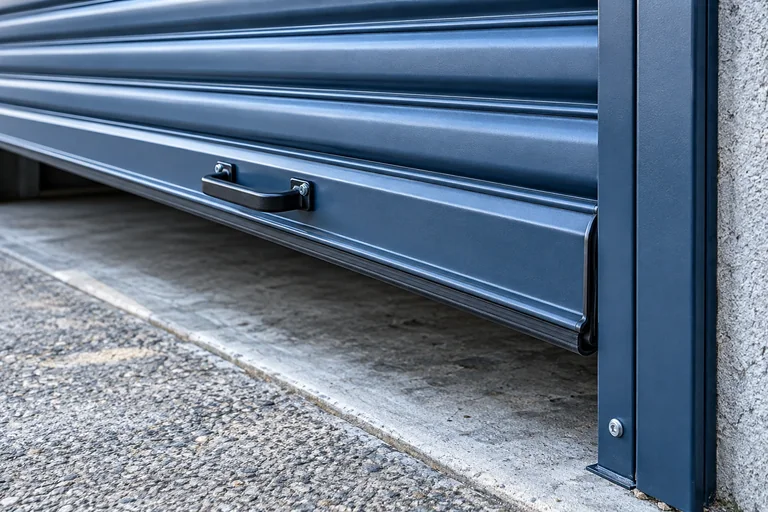
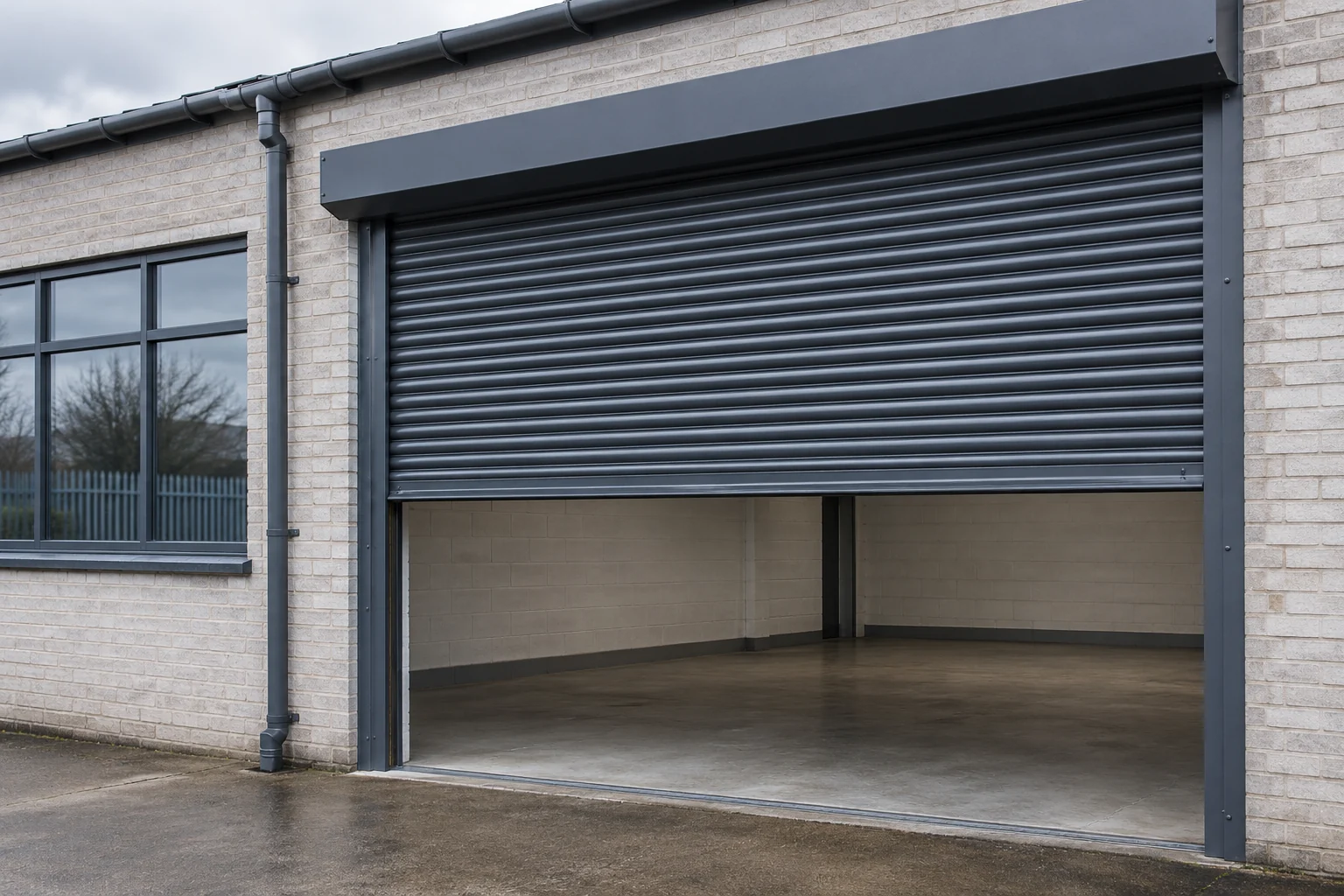
Start with an ordinary description: roughly halfway up, just above the floor or short of its usual fully open position. Explain whether the problem happened while opening or closing. If the curtain is uneven, describe what is visible from a safe position.
There is no need to stand underneath it or measure the opening closely. The aim is to help the repair team picture the current access problem. Tell them whether the shutter now blocks a customer entrance, a staff doorway or a delivery opening, and whether another entrance remains available.
Report what happened before the stop
Explain what you observed during the operation that revealed the fault. Did the shutter begin moving normally, move unevenly or produce a different sound? Was the response completely different from the previous day?
Mention an impact or visible damage if you know about one, but distinguish what you saw from what someone suspects. Avoid running the shutter again solely to collect more evidence. Existing observations are enough to begin a conversation. An accurate account of one interrupted movement is more useful than a confident diagnosis based on a component you have not had assessed.
Identify how the shutter normally operates
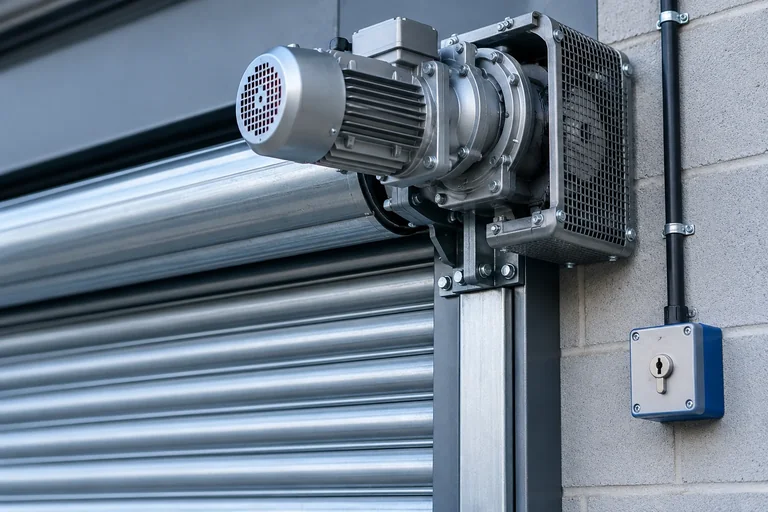
Say whether the system is manually operated or powered, and describe the control normally used for an electric shutter. If several shutters protect the building, identify this one using a bay number, frontage description or another clear reference.
Existing records may help with the make or operating arrangement if they are readily available. Do not remove covers or climb to find a label. Equipment identification helps organise the assessment, but it does not prove that a particular motor, control or mechanical part has failed.
Explain the practical access problem
A partly open shutter can affect premises in different ways. A shop may have another customer entrance, while a warehouse may need to reroute a planned delivery. Explain the actual situation rather than simply saying the business is closed.
Identify who controls the entrance and whether staff, customers or vehicles normally pass through it. Keep people clear of damaged or unstable equipment. Any temporary arrangements for the building should be coordinated by the responsible person at the premises, separately from the technical assessment of the shutter itself.
Prepare a useful repair enquiry
Have your name, contact number and the actual premises postcode ready. Give the curtain position, direction of travel and operating method, followed by the symptoms already observed.
If safe ground-level photographs are available, mention them when discussing the enquiry; they can illustrate the problem without settling the repair scope. Ask whether a visit is needed to establish the fault and parts required. Explain who can provide entry and who can approve the quotation, particularly if the business occupier and property manager are different people.
Keep assessment and repair decisions separate
A stopped curtain may need consideration of the operating equipment and the wider shutter assembly. Our roller shutter repairs page covers movement faults, while electric shutter repairs explains powered-system enquiries. The assessment determines whether compatible component work or another approach is appropriate.
Ask what the proposed quotation includes and how any further findings would be discussed. Do not treat the position of the curtain as proof that a complete replacement is necessary. The practical goal is an agreed next step based on the installed equipment, rather than a part selected in advance.
Keep this handy
Your enquiry checklist.
- Premises postcode and affected opening.
- Opening or closing when the fault appeared.
- Current curtain position and visible unevenness.
- Normal manual or electric operating method.
- Symptoms already observed, without extra testing.
- Alternative access and delivery restrictions.
- Access contact and quotation approval contact.
Clear answers
Common questions.
Does stopping halfway mean the motor has failed?
No. The symptom alone does not establish which component needs attention. Describe the operating response and curtain movement so the appropriate assessment can be discussed.
Should I keep trying to complete the movement?
Avoid repeated operation when the shutter behaves abnormally. Do not force it through resistance or bypass controls. Use the observations already available when enquiring.
Can a photo establish the required repair?
A safe photograph may help explain position or visible damage. It cannot establish every cause, compatibility requirement or part needed, so inspection may still be necessary.
What should a Manchester or Sale enquiry include?
Give the actual premises postcode and a brief fault description. Shutter Repairs Manchester can discuss attendance and the next step during its published 8am–8pm telephone hours.
Your repair visit
From your call to an on-site repair.
- Tell us what happened. We discuss the fault and whether repair, servicing or maintenance is needed.
- Get a free initial phone quotation. We explain the expected work and give you a price breakdown.
- Accept and arrange the deposit. Once you accept the quotation, we arrange the deposit and send an engineer or technician at the agreed time.
- Have the shutter repaired on site. We bring suitable parts and motors for the work. Any additional parts or repair costs are explained on site before you approve them.
Most repairs are completed within the first hour of work on site. This is repair time, not an arrival-time promise; the fault and parts required can affect completion.