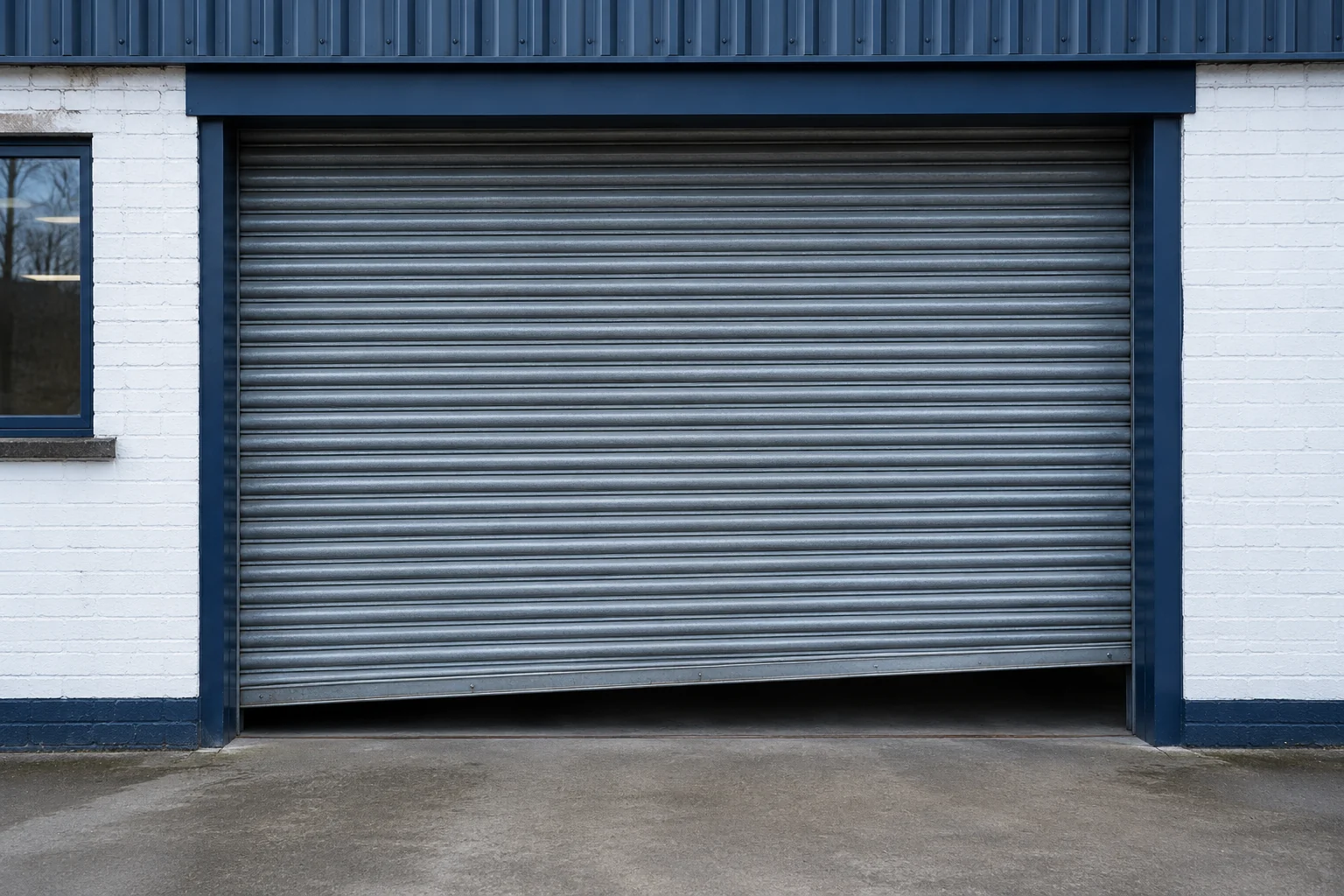
What to report when one side of a shutter appears higher, travel becomes skewed or the curtain no longer sits as it normally would. The guide is intended to help property users prepare a clear enquiry and understand the proposed next step. It does not diagnose equipment remotely or replace assessment of the installed system.
Uneven movement is different from simply stopping
A shutter may stop at the same height across its width, or one side may sit noticeably higher than the other. This guide concerns the second pattern: a curtain that looks tilted, skewed or uneven during travel or at rest.
Explain when the difference was noticed and the current position. A sloping bottom line is an observation rather than a diagnosis. Do not try to even it out by pulling one side or repeatedly operating the shutter.
Use a consistent entrance reference and viewpoint
For a wide opening, a description such as the left corner can become ambiguous. State whether the observation is from inside or outside, and identify the entrance or bay.
If several people have reported the fault, bring their existing observations together before calling. A safely taken photograph from an accessible position can help show the difference. There is no need to stand beneath a skewed curtain or place measuring equipment near moving parts to make the initial report more precise.
Report related symptoms without choosing the cause
Mention scraping, catching, visible guide damage or a recent impact if those were already observed. Keep each fact separate from a conclusion about which part failed first.
A curtain, guide and supporting assembly need to be considered as installed, and a photograph may not show every affected component. Our damaged slats and guides article covers visible damage more broadly. This enquiry should explain the movement pattern so assessment can relate any damage to the actual operating problem.
Do not use force to restore a straight line
A tilted curtain should not be treated as an adjustment for premises staff to complete. Avoid levering the bottom rail, altering guide fixings or attempting to support and move the shutter by hand.
Keep people clear and use the site procedure for faulty equipment. A shutter that appears straight again after abnormal movement has not thereby been shown to be fit for continued use. Explain the change to the responsible person and arrange appropriate assessment of the equipment.
Compare a repair proposal with the assessed condition
Ask which parts of the assembly are included and how the proposal addresses the uneven travel. A limited component repair may differ from replacement of a complete curtain or shutter.
If further findings remain possible, clarify how they would be explained before authorisation. Existing records may help identify earlier work but should not substitute for present assessment. Our roller shutter repairs page explains movement enquiries, and the replacement page sets out the broader discussion where repair is unsuitable.
What a useful assessment and quotation should cover
We provide a free initial quotation by phone from your fault description. The engineer checks the installed equipment on site and explains any additional repair costs before approval.
Give the access and approval contacts for the affected opening. Existing records may help identify the shutter; the agreed work reflects its current condition.
Arrange a Greater Manchester repair enquiry
Shutter Repairs Manchester is based in Sale and covers Greater Manchester. Call 0161 207 1472 with the premises postcode, affected entrance and the symptoms already observed.
Telephone enquiries are available Monday to Sunday, 8am–8pm, and free quotations can be discussed for the proposed work. Explain any site-entry restrictions and nominate the person who can meet the technician. Use the related service links to understand the offering, then ask whether attendance is required to establish the suitable repair scope for the installed equipment.
Keep this handy
Questions and information to prepare.
- Opening or bay reference.
- Inside or outside viewpoint.
- Position when unevenness was first noticed.
- Other symptoms and any known event.
- Current access and approval contacts.
Clear answers
Your questions, answered.
Can this guide confirm the work needed at my premises?
No. The installed equipment, reported symptoms and assessed condition determine the appropriate proposal. Use the guide to organise information and questions, then discuss whether a visit is needed to confirm the work.
What information helps the initial conversation?
Give the premises postcode, affected entrance and normal operating method. Describe the symptoms already observed and identify who provides access and approves the work. Readily available records may help without dismantling or additional testing.
Where can I find the relevant repair service?
The service links below explain the corresponding enquiry scopes. Shutter Repairs Manchester covers Greater Manchester from its Sale base, with telephone enquiries available Monday to Sunday, 8am–8pm, and free quotations discussed for the proposed work.
Your repair visit
From your call to an on-site repair.
- Tell us what happened. We discuss the fault and whether repair, servicing or maintenance is needed.
- Get a free initial phone quotation. We explain the expected work and give you a price breakdown.
- Accept and arrange the deposit. Once you accept the quotation, we arrange the deposit and send an engineer or technician at the agreed time.
- Have the shutter repaired on site. We bring suitable parts and motors for the work. Any additional parts or repair costs are explained on site before you approve them.
Most repairs are completed within the first hour of work on site. This is repair time, not an arrival-time promise; the fault and parts required can affect completion.