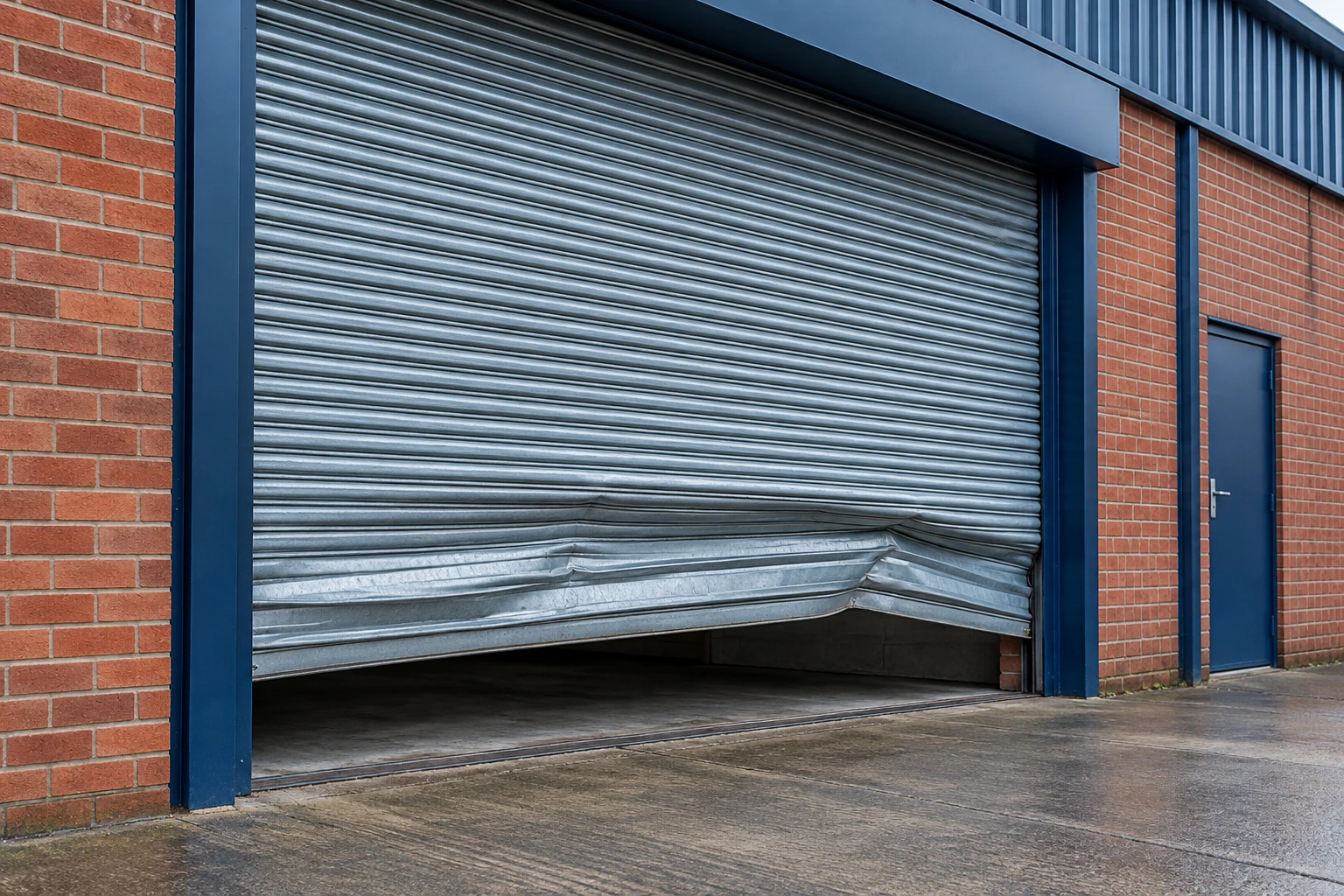
Describe visible curtain or guide damage safely and understand how compatible repairs and replacement are assessed. The guide is intended to help property users prepare a clear enquiry and understand the proposed next step. It does not diagnose equipment remotely or replace assessment of the installed system.
Describe visible damage from a safe position
Tell the team what can be seen without approaching unstable equipment or standing beneath a damaged curtain. Explain whether slats appear distorted, the curtain sits unevenly or a guide seems affected.
A safe ground-level photograph can help illustrate the enquiry. Do not pull components back into place or remove covers to make the account more detailed. The purpose is to describe the visible condition and arrange suitable assessment, not choose a repair method or confirm a failed part from appearance alone.
Connect damage with the operating change
Mention catching, scraping, interrupted travel or difficulty reaching the normal closed position where those symptoms have already been observed. The visible condition and movement should be described together.
An impact may be relevant if known, but it does not establish every repair requirement. Avoid repeating operation simply to demonstrate the fault. A useful account identifies what changed and how the opening is now affected, allowing the assessment to consider the installed assembly rather than treating each observation as a separate predetermined repair.
Identify the affected entrance and system
Give the premises postcode and a clear opening reference. Tell the team whether the shutter is manual or powered and how it normally operates. If several shutters are installed, distinguish the damaged opening from those still in use.
Existing records may help identify the equipment when readily available. Do not climb or dismantle components to obtain details. A photograph or description supports the enquiry but cannot establish compatibility of repair parts or settle the full scope for a system that needs closer inspection.
Do not assume only one part is involved
A visibly bent area may be the first thing noticed, but the wider curtain, guides and operating equipment can be relevant to assessment. Ask what the findings show and which components need consideration.
The proposal should explain suitable work without assuming that the most obvious damaged part is the complete problem. Equally, visible damage does not automatically mean the whole shutter must be replaced. Keep the enquiry focused on the installed assembly, observed symptoms and the options supported by its assessed condition.
Understand compatible repairs and replacement scope
Where component work is suitable, compatibility with the existing equipment needs to be established. A local repair is different from replacing the complete shutter, and motor-only work concerns another scope again.
Ask which existing parts are affected and what associated work is included. If repair is unsuitable, like-for-like replacement can be discussed for the current opening. A clear quotation makes those differences understandable rather than using the word replacement as though every proposal involved the same equipment or outcome.
Prepare access and approval arrangements
Explain the curtain’s current position, any alternative entrance and the person responsible for site entry. Tell the team about customer, delivery or vehicle movements near the opening when discussing a visit.
At managed premises, identify who receives the quotation and who can authorise the work. These details help coordinate assessment without assuming a particular appointment or completion time. Temporary arrangements for the wider building should be handled by the responsible premises contact while the repair enquiry establishes the appropriate scope.
Use the relevant shutter repair service
Our roller shutter repairs page covers movement and curtain enquiries, while security and shopfront pages explain normal closure and retail access considerations. Describe the damage first; you do not need to decide which component has failed before calling.
Shutter Repairs Manchester covers Greater Manchester, with telephone enquiries available daily from 8am to 8pm. Give the postcode and a short account of the fault so the next step and free quotation can be discussed for the actual equipment and premises.
Describe each damaged opening separately
For premises with more than one affected shutter, keep photographs and observations labelled by entrance.
Mention whether visible damage followed an event or was noticed during normal use, without assuming that this establishes every underlying fault. Ask whether the proposed repair covers the complete assessed damage and which findings may change the recommendation.
Keep this handy
Questions and information to prepare.
- Safe description of the visible damage.
- Movement symptoms already observed.
- Known impact or relevant history.
- Operating method and opening reference.
- Current position and available access.
- Existing records if readily available.
- Questions about compatible work and scope.
Clear answers
Your questions, answered.
Can this guide confirm the work needed at my premises?
No. The installed equipment, reported symptoms and assessed condition determine the appropriate proposal. Use the guide to organise information and questions, then discuss whether a visit is needed to confirm the work.
What information helps the initial conversation?
Give the premises postcode, affected entrance and normal operating method. Describe the symptoms already observed and identify who provides access and approves the work. Readily available records may help without dismantling or additional testing.
Where can I find the relevant repair service?
The service links below explain the corresponding enquiry scopes. Shutter Repairs Manchester covers Greater Manchester from its Sale base, with telephone enquiries available Monday to Sunday, 8am–8pm, and free quotations discussed for the proposed work.
Your repair visit
From your call to an on-site repair.
- Tell us what happened. We discuss the fault and whether repair, servicing or maintenance is needed.
- Get a free initial phone quotation. We explain the expected work and give you a price breakdown.
- Accept and arrange the deposit. Once you accept the quotation, we arrange the deposit and send an engineer or technician at the agreed time.
- Have the shutter repaired on site. We bring suitable parts and motors for the work. Any additional parts or repair costs are explained on site before you approve them.
Most repairs are completed within the first hour of work on site. This is repair time, not an arrival-time promise; the fault and parts required can affect completion.