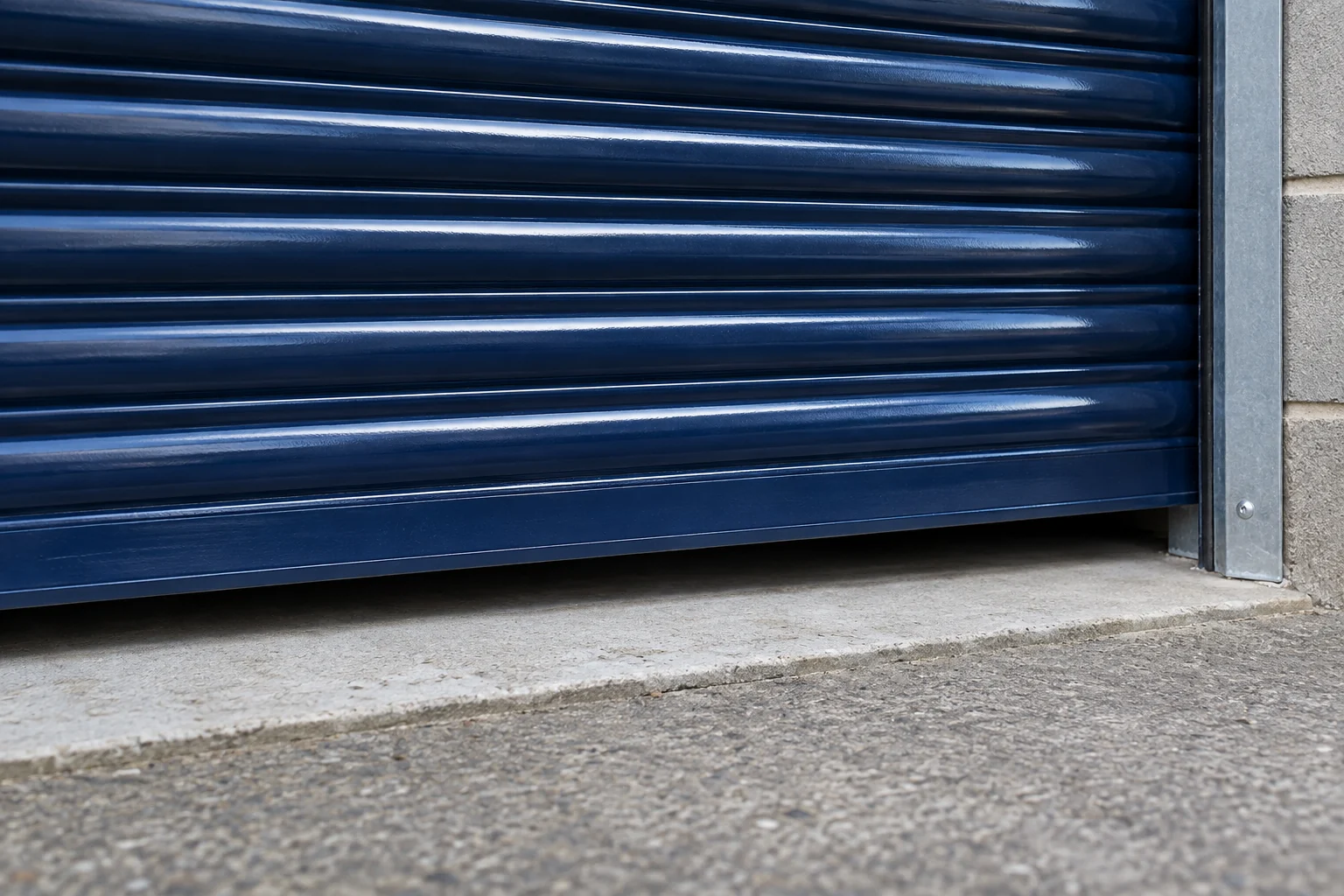
Understand the difference between stopping short, an uneven closing line and reversing before the shutter reaches its normal position. The guide is intended to help property users prepare a clear enquiry and understand the proposed next step. It does not diagnose equipment remotely or replace assessment of the installed system.
Which incomplete closing pattern have you seen?
A shutter that does not close fully can stop with a consistent gap, finish unevenly across the opening or move back upwards before reaching the floor. Describe the pattern already observed and the current position rather than repeatedly running it to decide which description fits.
Note whether the change happened suddenly or developed over time. Those details make the enquiry more precise without confirming that an adjustment, replacement motor or new curtain will be the right solution.
A visible gap does not identify one failed part
The closing position is the result of the installed assembly operating together. A difference at the bottom of the curtain may need mechanical assessment as well as consideration of the powered system where fitted.
On some products, manufacturer instructions direct users to the installer when travel stops outside its intended position. That does not make a generic adjustment suitable for every shutter. Do not change travel settings or protective arrangements using instructions written for equipment that has not been identified.
Explain where the closing line differs
If the curtain appears higher at one side, say whether you viewed it from inside or outside. This prevents two people describing opposite sides as the same location.
A safely taken photograph can show the closing line without anyone reaching beneath the curtain. If the bottom rail looks damaged, mention that separately. Do not place objects under the shutter to measure a gap or encourage contact; the initial call only needs an understandable account of what has already been noticed.
Relate the gap to normal closure
Tell us whether the problem affects securing the frontage, the normal closing routine or both. A shutter that looks nearly closed should not automatically be treated as fully secured.
The actual locking arrangement and equipment condition matter. Our security page explains closure enquiries, while the bottom-rail guide covers visible damage to the lower member. Keep any separate door lock issue distinct so the proposed shutter work is not assumed to cover other security equipment at the premises.
Ask how the proposed work addresses the symptom
A useful proposal explains what assessment supports the work and which part of the closing problem it addresses. Ask whether other findings could change the scope and how those changes would be authorised.
Complete shutter replacement, a compatible component repair and an operating adjustment are different proposals. Keep the opening reference with the quotation and retain any subsequent findings. Ongoing servicing can then be discussed with the reported fault clearly recorded rather than assumed to be resolved by a general maintenance booking.
What a useful assessment and quotation should cover
We provide a free initial quotation by phone from your fault description. The engineer checks the installed equipment on site and explains any additional repair costs before approval.
Give the access and approval contacts for the affected opening. Existing records may help identify the shutter; the agreed work reflects its current condition.
Arrange a Greater Manchester repair enquiry
Shutter Repairs Manchester is based in Sale and covers Greater Manchester. Call 0161 207 1472 with the premises postcode, affected entrance and the symptoms already observed.
Telephone enquiries are available Monday to Sunday, 8am–8pm, and free quotations can be discussed for the proposed work. Explain any site-entry restrictions and nominate the person who can meet the technician. Use the related service links to understand the offering, then ask whether attendance is required to establish the suitable repair scope for the installed equipment.
Keep this handy
Questions and information to prepare.
- Gap, uneven line or reversal already observed.
- Viewpoint used to describe either side.
- Visible bottom-rail damage if present.
- Normal securing arrangement.
- Postcode, access and approval details.
Clear answers
Your questions, answered.
Can this guide confirm the work needed at my premises?
No. The installed equipment, reported symptoms and assessed condition determine the appropriate proposal. Use the guide to organise information and questions, then discuss whether a visit is needed to confirm the work.
What information helps the initial conversation?
Give the premises postcode, affected entrance and normal operating method. Describe the symptoms already observed and identify who provides access and approves the work. Readily available records may help without dismantling or additional testing.
Where can I find the relevant repair service?
The service links below explain the corresponding enquiry scopes. Shutter Repairs Manchester covers Greater Manchester from its Sale base, with telephone enquiries available Monday to Sunday, 8am–8pm, and free quotations discussed for the proposed work.
Your repair visit
From your call to an on-site repair.
- Tell us what happened. We discuss the fault and whether repair, servicing or maintenance is needed.
- Get a free initial phone quotation. We explain the expected work and give you a price breakdown.
- Accept and arrange the deposit. Once you accept the quotation, we arrange the deposit and send an engineer or technician at the agreed time.
- Have the shutter repaired on site. We bring suitable parts and motors for the work. Any additional parts or repair costs are explained on site before you approve them.
Most repairs are completed within the first hour of work on site. This is repair time, not an arrival-time promise; the fault and parts required can affect completion.