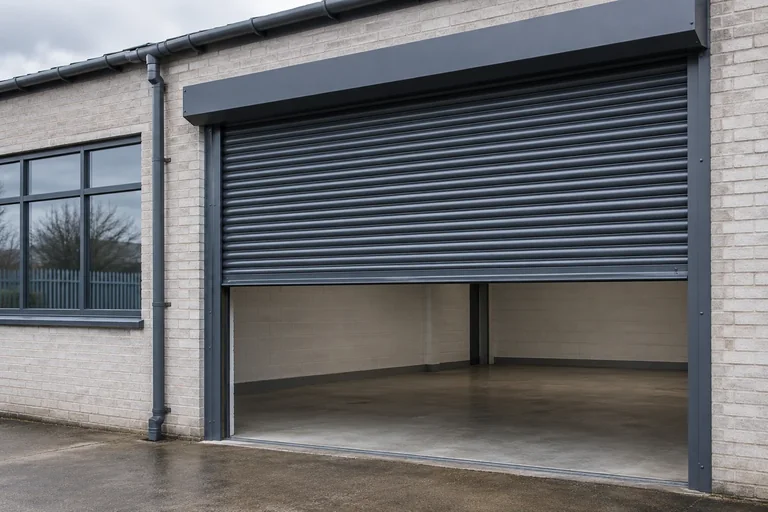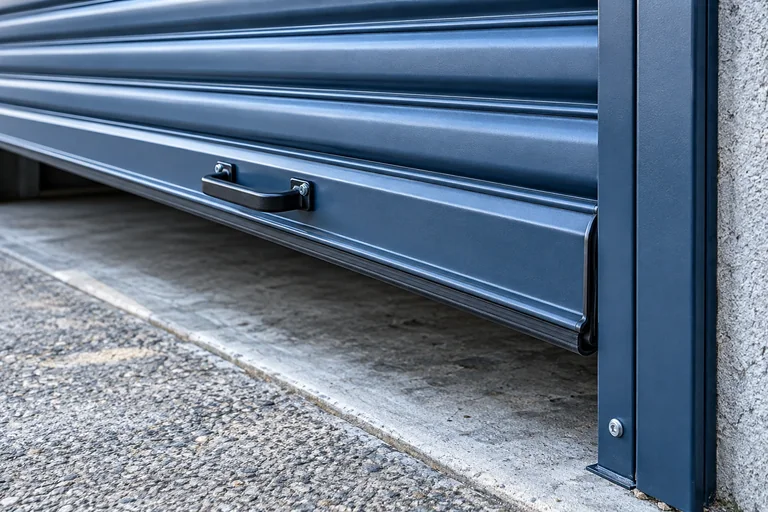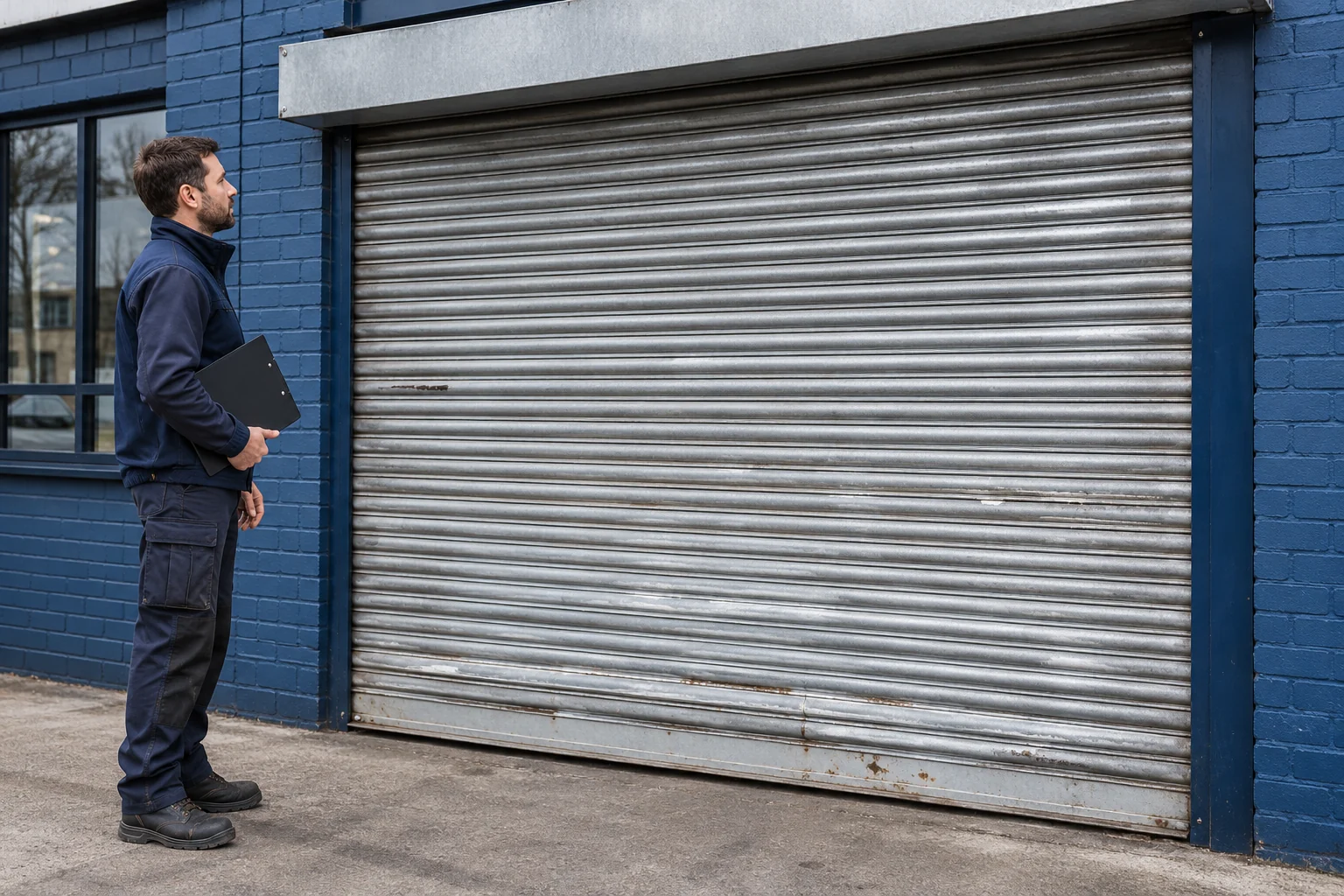
A damaged or unreliable shutter can lead to a familiar question: is it worth repairing, or should it be replaced? There is no useful universal answer based only on a photograph, age estimate or one symptom. The decision depends on the installed equipment, its assessed condition and suitable options. This guide explains what to ask so you can understand a proposal and compare its scope with the problem at your premises.
Begin with the problem you need resolved
Describe the fault and how it affects the entrance before choosing the scale of the work. A shutter that catches, travels unevenly or does not respond needs assessment; those symptoms do not automatically mean the entire system is unsuitable for repair.
Explain any visible damage and relevant history, including recurring problems that have already been reported. The assessment should connect the symptoms with the condition of the installed assembly. This gives the repair discussion a practical starting point and helps distinguish a current component problem from a wider replacement decision.
Separate the different meanings of replacement
The word replacement can describe very different scopes. A compatible component may be replaced during a repair. Motor replacement concerns the drive of an electric shutter, while whole-shutter replacement involves a broader assembly at the opening.
Those proposals should not be treated as interchangeable. Ask which existing parts the quotation addresses and which remain. A motor-only proposal does not automatically resolve unrelated curtain damage; a new curtain does not itself explain every control fault. Clear scope descriptions help you understand what the proposed outcome actually includes.
Ask how condition and compatibility affect the options
Suitable repair options depend on the equipment and the extent of assessed damage or wear. Compatibility matters when replacement components are considered; visual similarity is not enough to establish that a part suits the installed system.
Ask what the assessment found, what repair options are appropriate and whether any other identified issues remain relevant. Do not assume a universal rule based on a shutter’s appearance or a single damaged area. The useful question is why a particular proposal fits this assembly and the problem you need to resolve.
Compare quotations on the same scope
Two totals are difficult to compare if they describe different work. Ask what components, associated work and assessment assumptions are included in each proposal. Identify anything that still depends on inspection or further approval.
Explain any access restrictions that could affect arrangements, and confirm who will authorise the work. A clear quotation is useful because it ties the proposed cost to an understood scope; it does not need to look larger or smaller simply to sound more comprehensive. Avoid treating an unconfirmed estimate as a final specification for the entire entrance.
Think about premises arrangements as well as equipment
The practical arrangements can matter to a shop, warehouse or managed building. Explain opening hours, deliveries, site entry and the people responsible for approval.
Ask how attendance and any proposed work will be coordinated, without inferring a completion time from another property’s experience. A repair-duration average is different from a booked arrival or a replacement programme. Clear arrangements help the business prepare for the agreed work, while the technical proposal remains based on the installed shutter rather than the urgency or inconvenience of the enquiry alone.
Keep maintenance separate from the decision to replace
Planned care and current fault repair have different purposes. Explain known problems when arranging servicing, and ask how any repair findings would be discussed before additional work is authorised.
A service enquiry is not a promise that no future fault will occur, and a maintenance recommendation is not automatically a recommendation to replace the whole shutter. Once the appropriate repair or replacement is agreed, ask what information is relevant to the ongoing operation of that equipment. Keep the records so future enquiries can distinguish previous work from a new change in condition.
Keep this handy
Your enquiry checklist.
- What fault or damage has been assessed?
- Which repair options are suitable, and why?
- Which components are included in the proposal?
- Is the work component-only or whole-shutter?
- What remains subject to inspection or approval?
- How are access and timing to be agreed?
- What records will help future servicing enquiries?
Clear answers
Common questions.
Does one damaged slat mean I need a new shutter?
Not necessarily. The extent of damage, compatibility of parts and condition of the wider assembly determine the suitable options. Assessment is needed before deciding the scope.
Is replacing a motor the same as replacing a shutter?
No. A motor is one part of a powered shutter. Ask which equipment and associated work are included, and whether unrelated damage or other faults remain relevant.
Can a website give an accurate replacement price?
A general guide cannot establish every requirement of your opening. Some enquiries need inspection before a suitable scope, compatible equipment and quotation can be confirmed.
What replacement service is offered here?
Shutter Repairs Manchester discusses like-for-like replacement of an existing shutter where repair is unsuitable. Describe the equipment and problem so the appropriate next step can be considered.
Your repair visit
From your call to an on-site repair.
- Tell us what happened. We discuss the fault and whether repair, servicing or maintenance is needed.
- Get a free initial phone quotation. We explain the expected work and give you a price breakdown.
- Accept and arrange the deposit. Once you accept the quotation, we arrange the deposit and send an engineer or technician at the agreed time.
- Have the shutter repaired on site. We bring suitable parts and motors for the work. Any additional parts or repair costs are explained on site before you approve them.
Most repairs are completed within the first hour of work on site. This is repair time, not an arrival-time promise; the fault and parts required can affect completion.