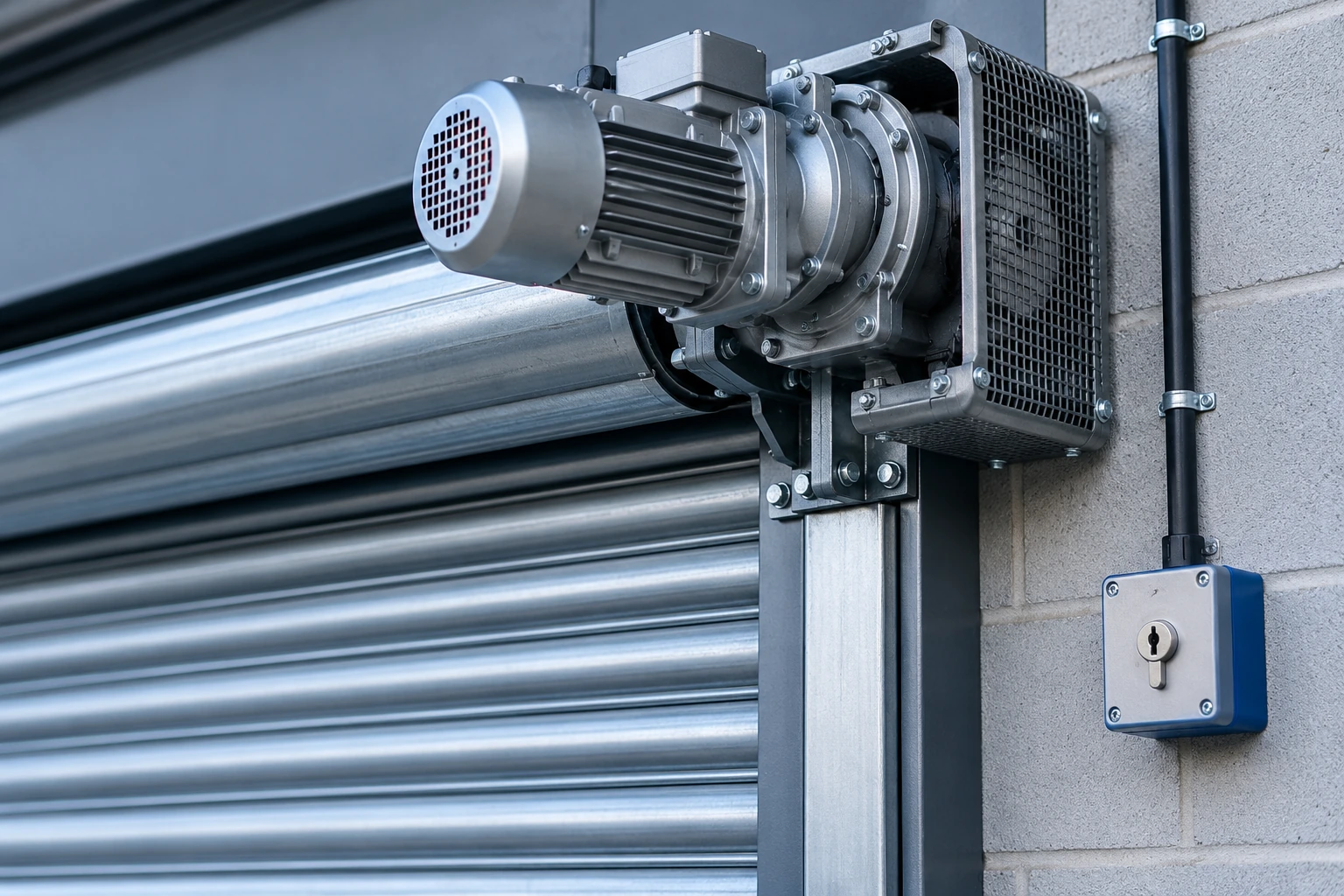
Repair enquiries for existing office security shutters, with attention to reception access, occupier contacts and manual or powered equipment. We provide an engineer or technician repair visit for existing manual and electric shutters across Greater Manchester. Suitable parts and motors are brought and fitted as part of the agreed work, with compatibility confirmed for the installed equipment. Tell us the actual postcode, current shutter position and symptoms already observed. This page explains the practical arrangements relevant to your premises, from the initial fault report through access, assessment and a clear quotation for the proposed repair.
Identify the shutter within the office premises
An office can have a shutter at reception, a separate store opening or another part of the building. Describe the exact entrance and its normal operating method rather than request a general office-door repair.
This page concerns existing manual and electric shutters; other door types need their own scope confirmed before booking. State whether the curtain is open, closed or part way through travel. Explain the change already observed and whether it affects normal access, closure or both, without choosing a replacement component in advance.
Separate occupier access from building management
Reception staff may provide entry while a facilities contact or managing agent approves work. Identify those roles at the initial enquiry and explain any visitor reporting process relevant to the affected area.
The actual premises postcode is needed even if the occupier has a different registered or billing address. Our commercial page explains wider premises enquiries. A clear opening reference helps the site contact, approving manager and technician discuss the same equipment rather than different shutters elsewhere in a shared building.
Describe powered controls without opening enclosures
If the shutter is electrically operated, say whether users normally use a wall switch, key switch or handset. Report the response already observed, including any partial movement or changed sound, without carrying out further comparisons.
Equipment information held by building management may be useful if readily available. Do not remove covers or access restricted electrical equipment to gather model details. Our electric page covers the overall repair enquiry, while the control guides distinguish handset symptoms from fixed-switch reports and help explain the relevant observations.
Coordinate the area affected by attendance
Tell us about access restrictions near the shutter and the person responsible for coordinating the work area. A meeting room, reception desk or shared corridor may have different arrangements from the goods entrance.
These are practical booking details rather than a guarantee that every repair can be completed during a particular break. Keep people away from visibly damaged equipment and avoid using extra force to create access. An authorised alternative route should follow the premises own arrangements rather than be assumed suitable from its appearance.
Review scope with the appropriate decision maker
We give an initial price breakdown by phone. The engineer confirms the equipment on site and explains any additional work or costs before approval. A drive repair does not mean the complete shutter is being renewed.
Similarly, a curtain repair should not be assumed to resolve unrelated control faults. Keep all reported observations with the opening reference so the approval contact receives the same account as the person providing access. If another concern is identified, ask how it will be reported and priced before additional work is authorised at the premises.
Retain useful records after staff changes
Office responsibility can pass between occupiers, reception teams and property managers. Keep the quotation, findings and any follow-up recommendation with the equipment record rather than only in a personal message thread.
If planned servicing is required, identify the shutters and existing faults explicitly. Suitable arrangements relate to the installed system and its use, not the office label alone. Our maintenance-record guide explains useful information to retain, while the servicing page describes the initial discussion about agreed care and separately approved repair work.
Discuss the next practical step
Shutter Repairs Manchester is based in Sale and covers Greater Manchester. Call 0161 207 1472 with the actual premises postcode and a short account of the shutter problem.
Telephone enquiries are available Monday to Sunday, 8am–8pm. Free quotations can be discussed for the proposed work; ask whether a visit is needed to establish the suitable scope. Keep the access and approval contacts clear, then use the related services and guides to prepare any questions about the installed equipment, repair options and agreed arrangements.
Clear answers
Your questions, answered.
Can our reception team provide access while the agent approves the work?
Yes. Explain the two contacts and their roles, using the same premises address and opening reference for the visit and quotation.
Does this cover every kind of office door?
This page concerns existing shutters. Describe other door or access equipment separately so service suitability can be confirmed before an appointment is arranged.
What should I have ready for the initial call?
Give the actual premises postcode, affected opening, current shutter position and normal operating method. Describe the change already observed and identify who provides access and approves the proposal. Pass on equipment records where readily available without dismantling or further testing.
Your repair visit
From your call to an on-site repair.
- Tell us what happened. We discuss the fault and whether repair, servicing or maintenance is needed.
- Get a free initial phone quotation. We explain the expected work and give you a price breakdown.
- Accept and arrange the deposit. Once you accept the quotation, we arrange the deposit and send an engineer or technician at the agreed time.
- Have the shutter repaired on site. We bring suitable parts and motors for the work. Any additional parts or repair costs are explained on site before you approve them.
Most repairs are completed within the first hour of work on site. This is repair time, not an arrival-time promise; the fault and parts required can affect completion.