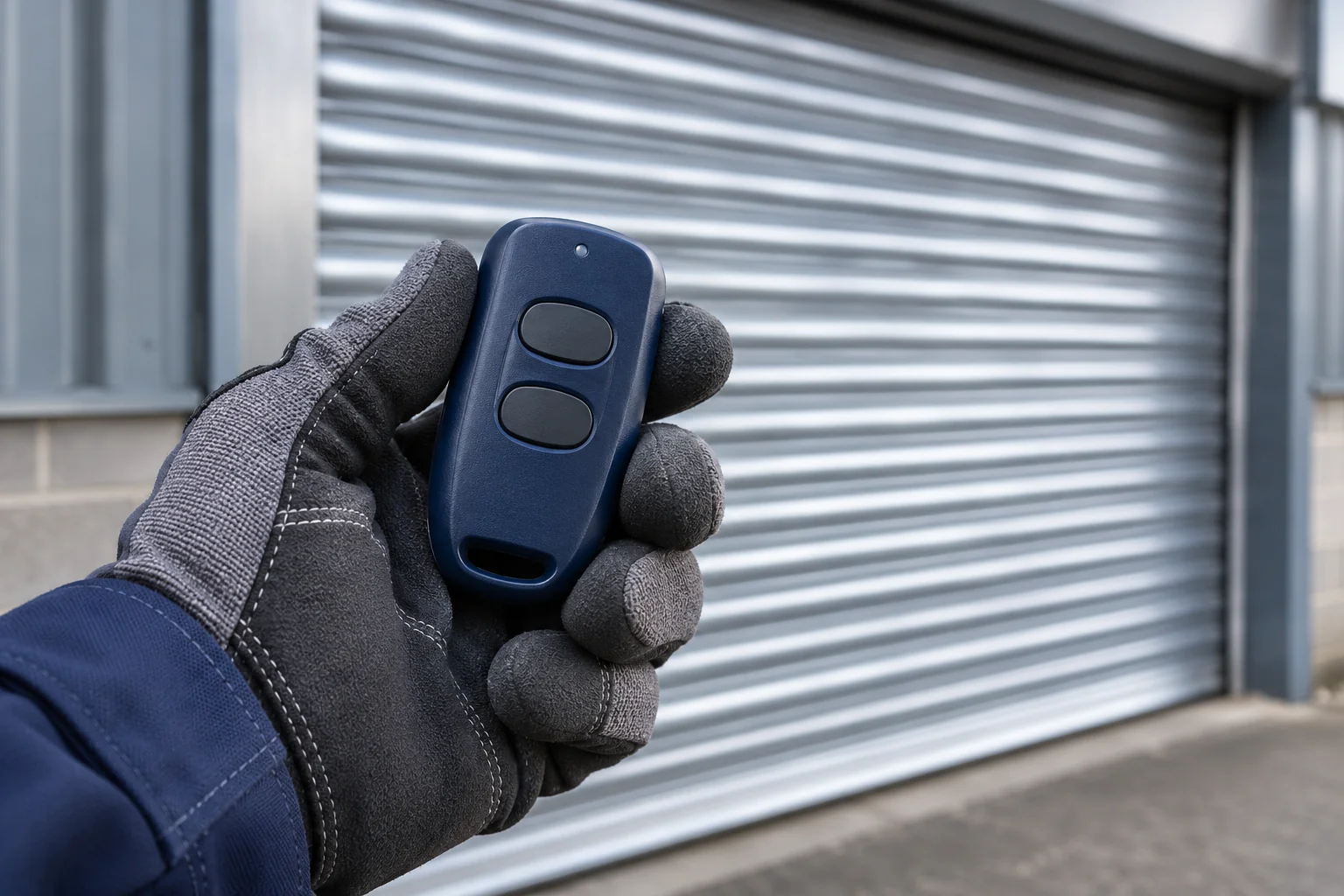
Prepare a useful account of an operating-control problem without pairing, bypass or electrical test instructions. The guide is intended to help property users prepare a clear enquiry and understand the proposed next step. It does not diagnose equipment remotely or replace assessment of the installed system.
Describe the installed control arrangement
Tell the team how the shutter is normally operated and which device did not produce the expected response. A remote-control symptom concerns an operating arrangement, not a diagnosis of a failed drive.
Different installations use different controls, so avoid applying a procedure found for another system. Explain the current curtain position and affected entrance. This guide helps prepare an enquiry; it does not provide pairing, wiring, bypass or adjustment instructions for equipment that has not been identified and assessed.
Report the response already observed
Say whether there was no movement, interrupted travel or an unreliable response during ordinary use. Mention relevant sounds or visible damage already noticed without operating the shutter again just to collect evidence.
If you know that the issue began after an impact or another event, explain that as a fact rather than assume the event proves the cause. A useful account describes what happened, which control was involved and how the opening is currently affected.
Keep controls and the wider assembly in view
A shutter’s response depends on the installed operating equipment and wider mechanical condition. An enquiry about a remote should therefore include visible curtain damage, uneven movement or other changes already known.
Do not choose a new motor or control device solely because one operating attempt failed. Our electric repair service considers the broader powered-system enquiry, while motor-specific assessment is explained separately. The suitable work follows assessment of the equipment rather than a generic list of likely parts.
Use records without dismantling equipment
Readily available instructions, earlier service details or identification records may help explain which system is fitted. Keep information tied to the affected opening, particularly where several shutters have similar controls.
Do not remove covers, reach into the mechanism or climb to find a label. Safe ground-level photographs may help illustrate the enquiry without establishing compatibility or the complete repair scope. If identification details are missing, say so and ask what assessment is appropriate rather than substituting another product’s instructions.
Explain practical access and authority
Give the actual premises postcode and identify who can provide entry. At a managed property, the person reporting the problem may not approve the work.
Provide the quotation contact and access contact separately where needed. Explain whether the curtain is preventing access or normal closure, and whether another entrance is available. These practical details help arrange the next step without assuming a particular appointment, replacement device or attendance promise from a short online description.
Ask what the quotation will establish
Some enquiries need a visit before the cause, compatible components and appropriate scope can be confirmed. Ask what the proposed assessment covers and how further findings would be communicated.
A component replacement, control issue and motor enquiry may involve different work. Do not assume that a new device will address unrelated shutter damage or that one quotation includes every possible fault. Keep the proposal tied to the assessed equipment and the operating problem you have actually reported.
Arrange the relevant repair discussion
Call Shutter Repairs Manchester with the postcode, operating method and symptoms during the published daily 8am–8pm hours. Greater Manchester coverage is available, with visit arrangements discussed for the premises.
You do not need to diagnose a control or motor failure before asking for help. Our electric and motor pages explain the different enquiry scopes, while Contact provides the current telephone and online-form status. The practical goal is an understood next step rather than an unverified remote-control repair procedure.
Separate the controls in your description
Where different shutters use different handsets or switches, identify the affected combination clearly.
Explain the response you have already seen without repeating operation to produce a demonstration. This gives the conversation a definite starting point and helps avoid confusing a single entrance problem with an assumed fault across every powered shutter on the site.
Keep this handy
Questions and information to prepare.
- Affected entrance and current position.
- Control normally used.
- Response already observed.
- Known damage or relevant history.
- Readily available system information.
- Access and approval contacts.
- Questions about assessment and scope.
Clear answers
Your questions, answered.
Can this guide confirm the work needed at my premises?
No. The installed equipment, reported symptoms and assessed condition determine the appropriate proposal. Use the guide to organise information and questions, then discuss whether a visit is needed to confirm the work.
What information helps the initial conversation?
Give the premises postcode, affected entrance and normal operating method. Describe the symptoms already observed and identify who provides access and approves the work. Readily available records may help without dismantling or additional testing.
Where can I find the relevant repair service?
The service links below explain the corresponding enquiry scopes. Shutter Repairs Manchester covers Greater Manchester from its Sale base, with telephone enquiries available Monday to Sunday, 8am–8pm, and free quotations discussed for the proposed work.
Your repair visit
From your call to an on-site repair.
- Tell us what happened. We discuss the fault and whether repair, servicing or maintenance is needed.
- Get a free initial phone quotation. We explain the expected work and give you a price breakdown.
- Accept and arrange the deposit. Once you accept the quotation, we arrange the deposit and send an engineer or technician at the agreed time.
- Have the shutter repaired on site. We bring suitable parts and motors for the work. Any additional parts or repair costs are explained on site before you approve them.
Most repairs are completed within the first hour of work on site. This is repair time, not an arrival-time promise; the fault and parts required can affect completion.